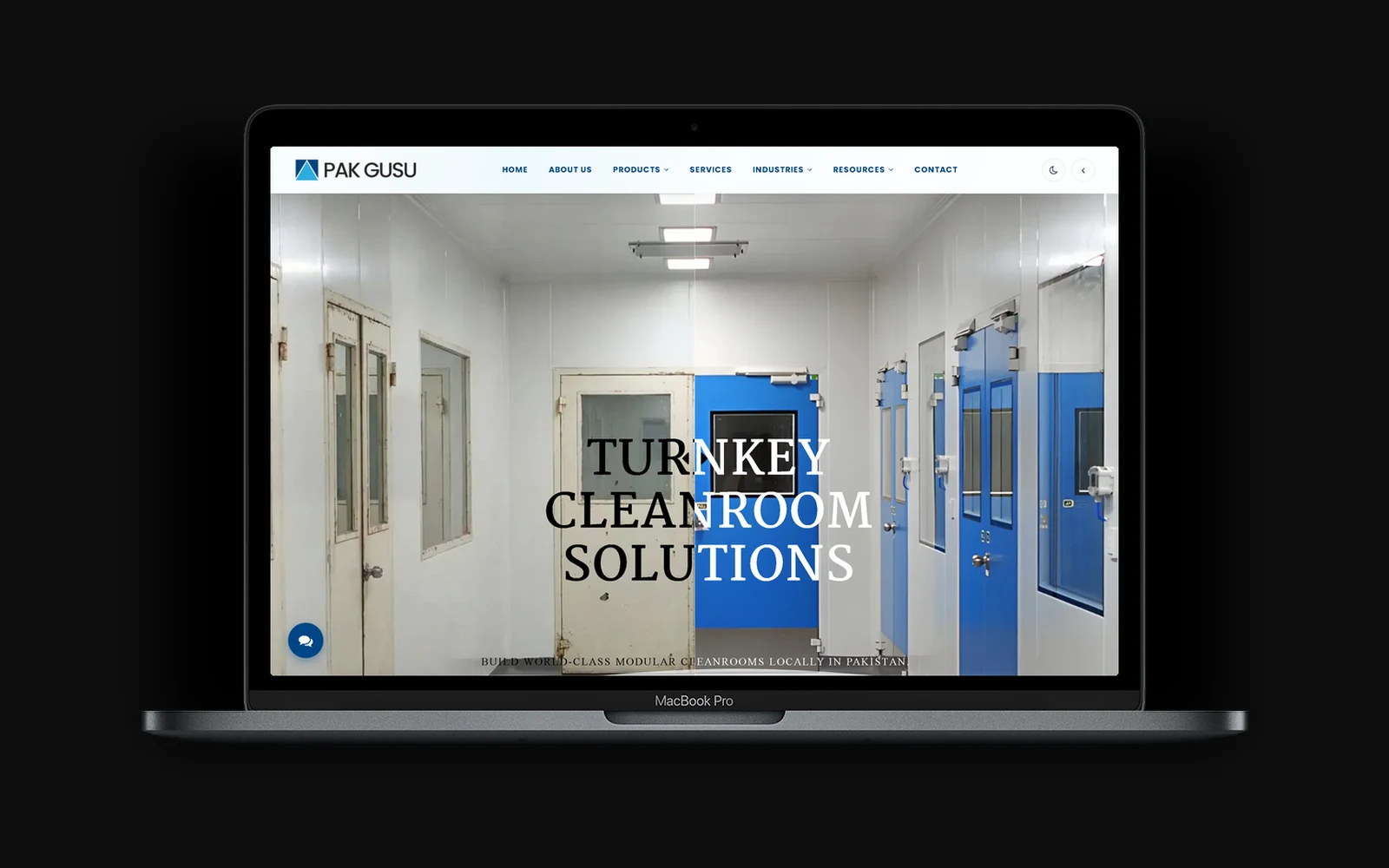
0 → 124 organic sessions/mo · page-1 for 12+ GCC buyer queries · 0 → ~4,600 impressions/mo · cited by ChatGPT, Copilot & Gemini — in two months, from zero

We didn't redesign a website — we engineered an asset: from zero organic visitors to page-1 across the GCC in two months.
Starting from zero: the brief behind this rebuild
Most B2B manufacturers we meet have a website that looks fine and does nothing — it doesn't rank, and it doesn't turn visitors into enquiries. Pak Gusu Technology, a Lahore-based cleanroom manufacturer that exports modular cleanrooms and components across the six GCC states, started from an even harder place: no meaningful website, zero organic visitors, and nothing indexed by Google.
We rebuilt the entire site from the ground up as an engineering project, not a facelift. Our sister team, Apex Marketings, then ran the SEO, AEO, content and ads program on top of that foundation. The whole rebuild-and-grow cycle took two months. Below are the six engineering decisions that took the site from zero to a page-1 organic asset across the Gulf — each one taught first, then shown in the result.
Decision 1 — Static HTML for speed and Core Web Vitals
The principle: page speed and rendering stability are both ranking signals and conversion levers. A slow, CMS-heavy stack piles on plugins, database calls and render-blocking scripts that hurt Core Web Vitals and bury your content behind load time — and B2B buyers bounce before the form ever loads.
What we built: we rebuilt Pak Gusu as an 85-page static-HTML site — no CMS bloat, no database round-trips. Pages serve in roughly 1 second with a ~0.6s TTFB, so both Googlebot and buyers get content immediately.
Why it matters: a fast, static foundation is cheaper to crawl and easier to index, which set up everything that followed. Speed here isn't a vanity metric — it's the substrate that let a domain with no prior search presence start ranking at all.
Decision 2 — Structured data so machines understand the business
The principle: search engines and AI answer engines don't read a page the way a human does — they need machine-readable context about who you are and what you offer. Structured data (schema.org) is how you hand them that context explicitly instead of hoping they infer it.
What we built: full, valid structured data across the site — Organization/LocalBusiness, Service, FAQPage and BreadcrumbList — describing the manufacturer, its GCC service areas, each equipment line, and every FAQ.
Why it matters: clean schema makes a page eligible for richer treatment and clearer entity understanding. Combined with the content work, Pak Gusu now holds page-1 average positions for a dozen-plus GCC buyer queries — for example laf supplier ksa at #2.2 and modular cleanroom qatar at #3.3.
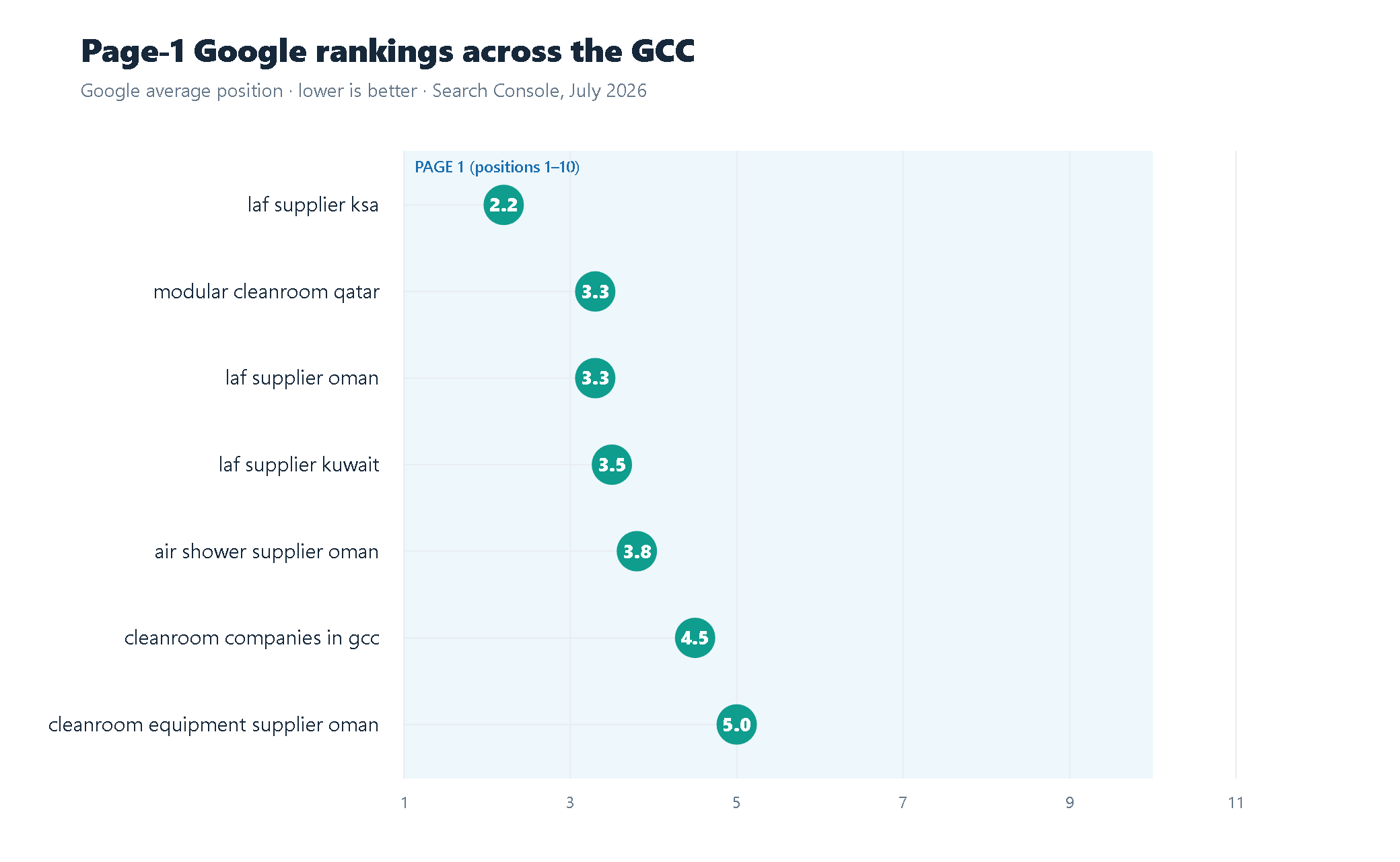
GSC average positions across GCC buyer queries.
Decision 3 — Native Arabic and hreflang for a bilingual market
The principle: the Gulf is bilingual. If you only publish in English, you're invisible to every buyer who searches in Arabic — and to Google, an English page bolted onto a translation plugin is not the same as a real localized page.
What we built: native Arabic, right-to-left (RTL) pages — not machine translations — with reciprocal hreflang annotations pairing each English page to its Arabic counterpart so Google serves the right language to the right searcher.
Why it matters: proper hreflang prevents duplicate-content confusion and captures Arabic-intent demand across the region. It's a core reason the rebuild competes on Gulf country queries rather than just Pakistani ones — the country-level and Arabic landing pages gave buyers in each of the six GCC states a page written for them.
Decision 4 — Answer-first content for AI answer engines (AEO)
The principle: buyers increasingly get answers from ChatGPT, Copilot and Gemini before they ever click a blue link. To be quotable by an AI engine, a page has to state the answer first — plainly, near the top — and back it with FAQ schema and clear entity signals.
What we built: answer-first content paired with FAQPage schema, an entity-clarity pass, and a published llms.txt that tells AI crawlers exactly what Pak Gusu is — and isn't.
Why it matters: this is Answer Engine Optimization (AEO), and it's already working — GA4 shows referral and assisted traffic from ChatGPT, Bing Copilot and Google Gemini. For a site with no prior search presence, being cited by the answer engines is authority it earned in its first two months.
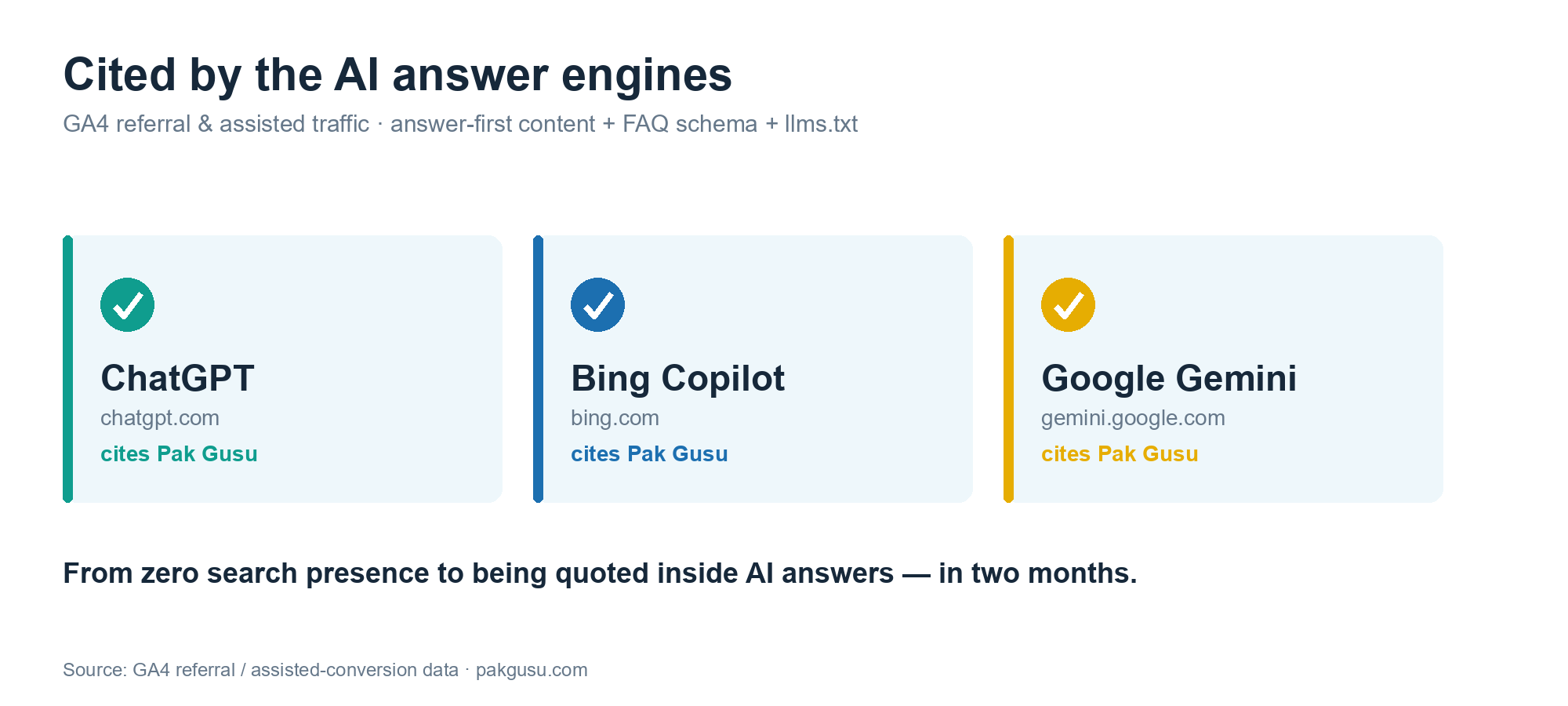
Cited by ChatGPT, Bing Copilot and Google Gemini (GA4 referral / assisted).
Decision 5 — Instrumented lead capture, measured end to end
The principle: ranking is worthless if the visitor can't convert and you can't measure it. B2B buyers convert on their own terms, so a rebuild needs several capture paths and full attribution — otherwise you're guessing where enquiries come from.
What we built: lead capture from scratch — quote forms with validation, a honeypot and rate-limiting; a cleanroom cost calculator; click-to-chat WhatsApp; a GA4 generate_lead event on every submission; and gclid/UTM capture feeding a dedicated /get-quote/ landing page.
Why it matters: every enquiry is now measured back to its source, spam is filtered before it reaches the inbox, and the site is paid-ready — a Google Ads tag plus GA4 conversion import meant Apex Marketings could switch on GCC search campaigns with real conversion tracking from day one.
Decision 6 — Crawl health and indexation as a first-class job
The principle: Google can only rank what it can crawl and index. Broken links, orphan pages and legacy 404s waste crawl budget and stall indexation — the invisible reason many rebuilds never gain traction.
What we built: a clean crawl surface — 0 broken links across 8,800+ internal references, a full sitemap plus IndexNow for instant submission, and a cleanup that mapped 21 legacy 404 URLs to 301 redirects so old inbound equity wasn't thrown away.
Why it matters: indexation moved from 0 to roughly 55 pages (of about 85), and impressions climbed from 0 to about 4,600 per month and are still rising — up 86% half-over-half in the latest window. Crawl health is the unglamorous work that lets every other decision actually show up in search.
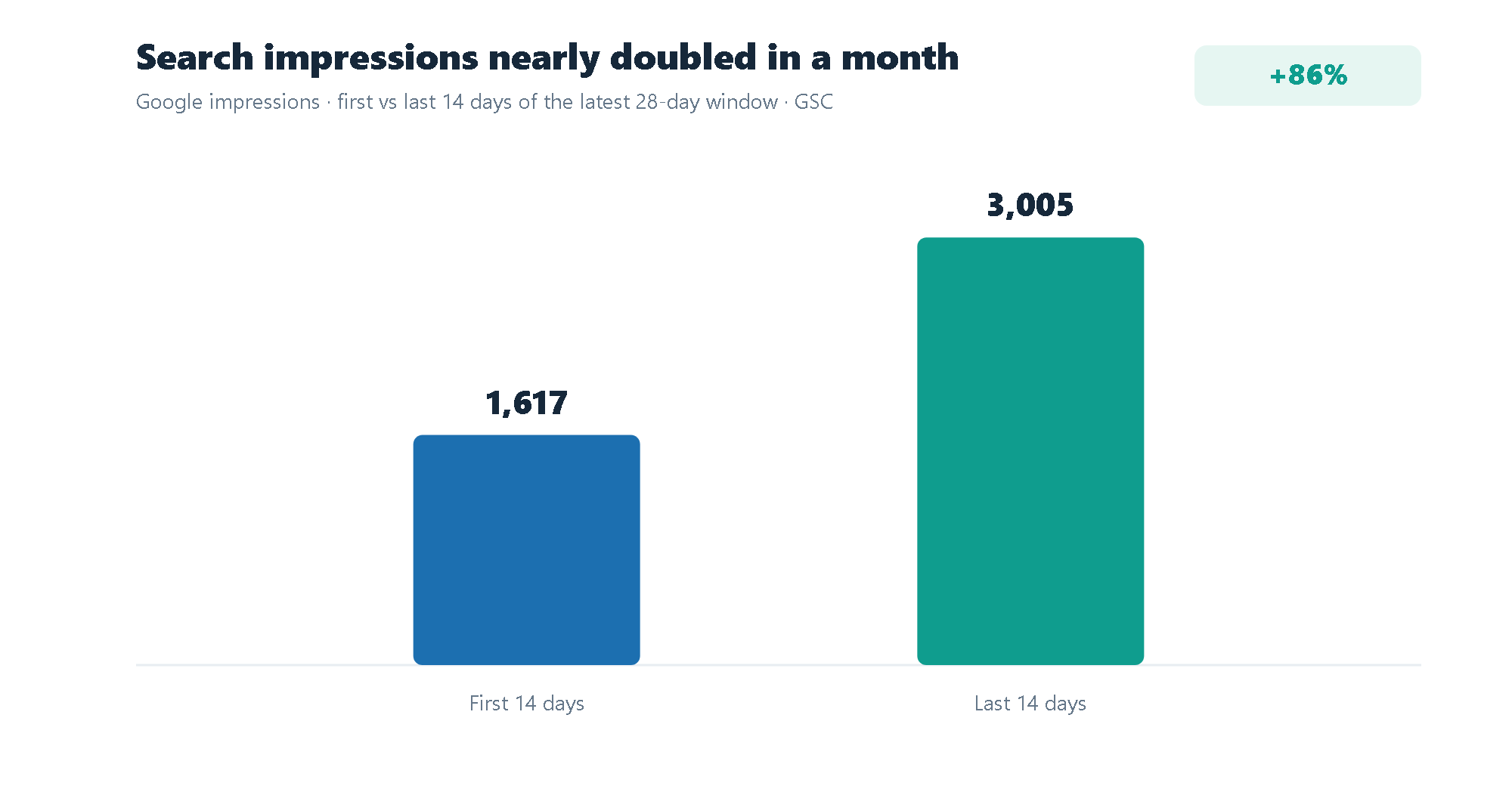
Impressions climbing from 0 to ~4,600/month, up 86% half-over-half.
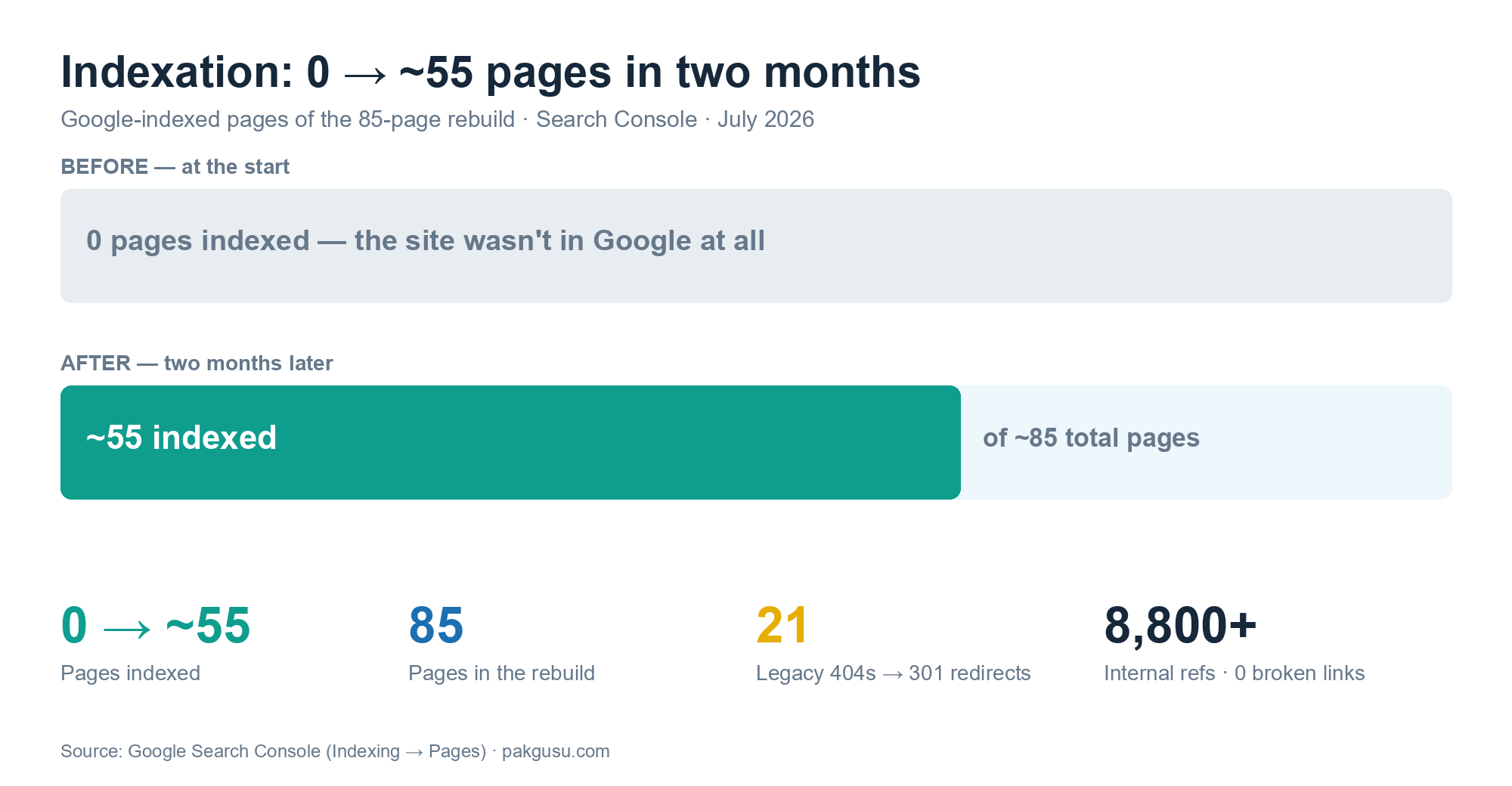
Indexation: 0 → ~55 of ~85 pages (GSC).
Two months in: what the foundation proves
Two months after the rebuild started, the pattern is clear. Organic search sessions grew from 0 to 124 per month (Google organic, GA4) on a measured climb of 78 → 91 → 99 → 124. The site holds page-1 average positions for a dozen-plus GCC buyer queries, ranks #1 for brand searches, and is cited by the major AI answer engines.
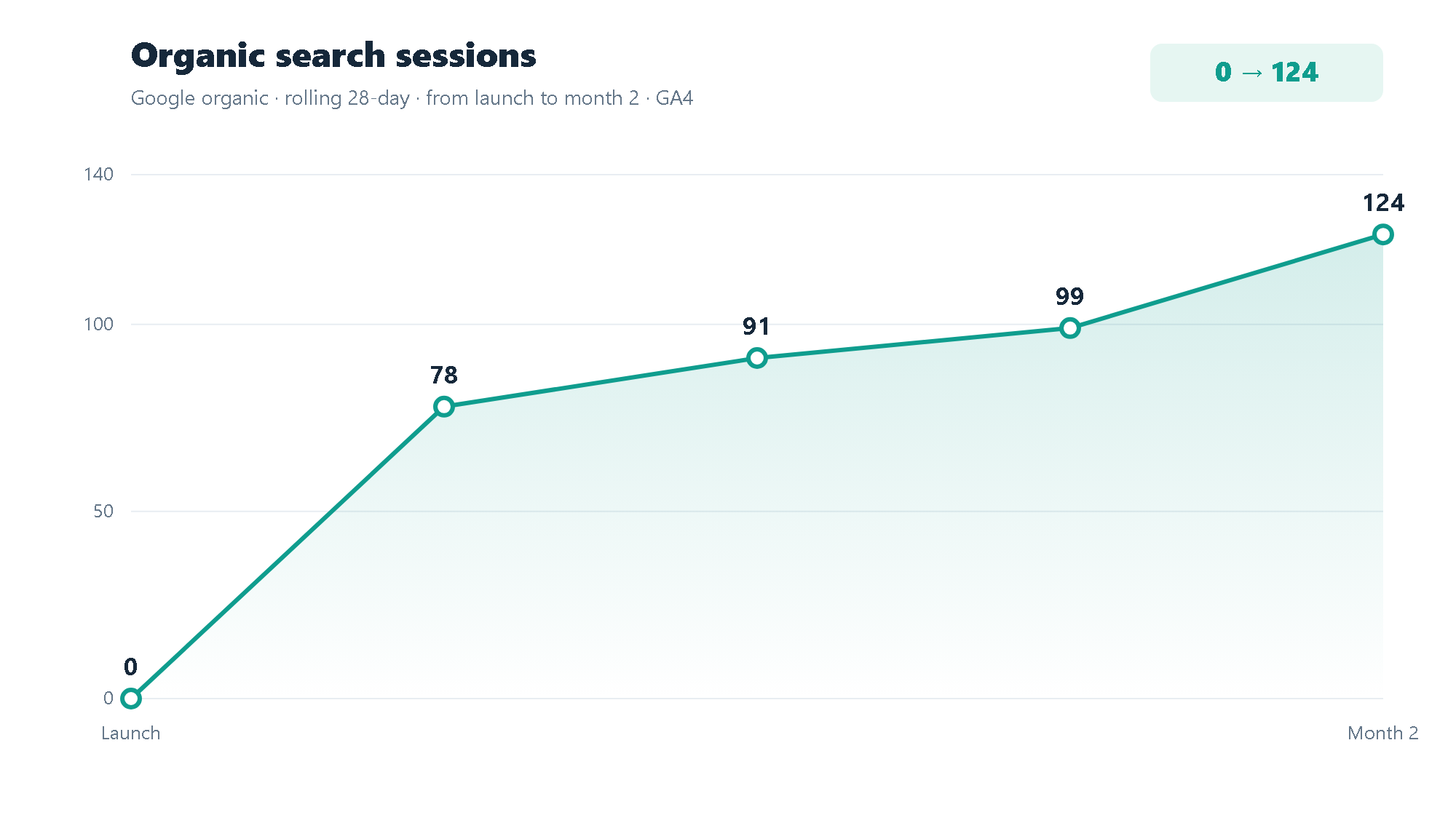
Organic sessions climbing 78 → 91 → 99 → 124 per month (GA4, Google organic).
We're honest about what this is: a proven foundation with strong early momentum, not a finished story. In B2B search, clicks lag rankings by weeks — impressions and positions move first, clicks follow. But the direction is unambiguous, and it came from engineering decisions, not luck. Rebuild the foundation correctly and the growth compounds; skip it, and no amount of marketing spend sticks.
Read the full Pak Gusu case study for the complete results write-up, or see how we build websites.
Planning a B2B rebuild that has to rank and convert? Talk to Apex IT Solutions about engineering yours from the ground up — the same way we rebuilt Pak Gusu from zero. Talk to an engineer for a free consultation.